
Call for a Free Consultation
586.303.2211
Divorce Mediation in Macomb County: How It Works, What It Costs, and When It’s Required
Divorce mediation is a process where a neutral third party helps both spouses reach an agreement on custody, support, and property without a trial. In Macomb County, the 16th Judicial Circuit Court routinely refers divorcing couples to mediation for custody and property disputes before a case is allowed to go to trial. Mediation is usually faster and cheaper than litigation, and it keeps the decisions in your hands rather than a judge’s. If you are heading into mediation, our Macomb County divorce attorneys can help you prepare so you do not give up more than you should.
What does a divorce mediator do?
A mediator guides the conversation and helps both spouses find common ground, but does not decide the outcome or take either side. The mediator is neutral. They cannot give either spouse legal advice, order anyone to do anything, or impose a settlement. Their job is to keep the discussion productive, clarify the real issues, and help the couple build an agreement they can both accept. Because the mediator will not protect your interests the way an attorney does, many people mediate with their own lawyer’s guidance in the background.
Is mediation required in a Macomb County divorce?
For many contested cases, yes. Judges in the 16th Judicial Circuit Court commonly order couples into mediation for custody and parenting time disputes, and often for property disputes, before permitting a trial. The court treats mediation as a standard step, not an optional one, because it resolves a large share of cases without using court time. You are required to participate in good faith, but you are never required to accept a deal. If mediation does not produce a full agreement, your case continues toward trial.
How does the mediation process work?
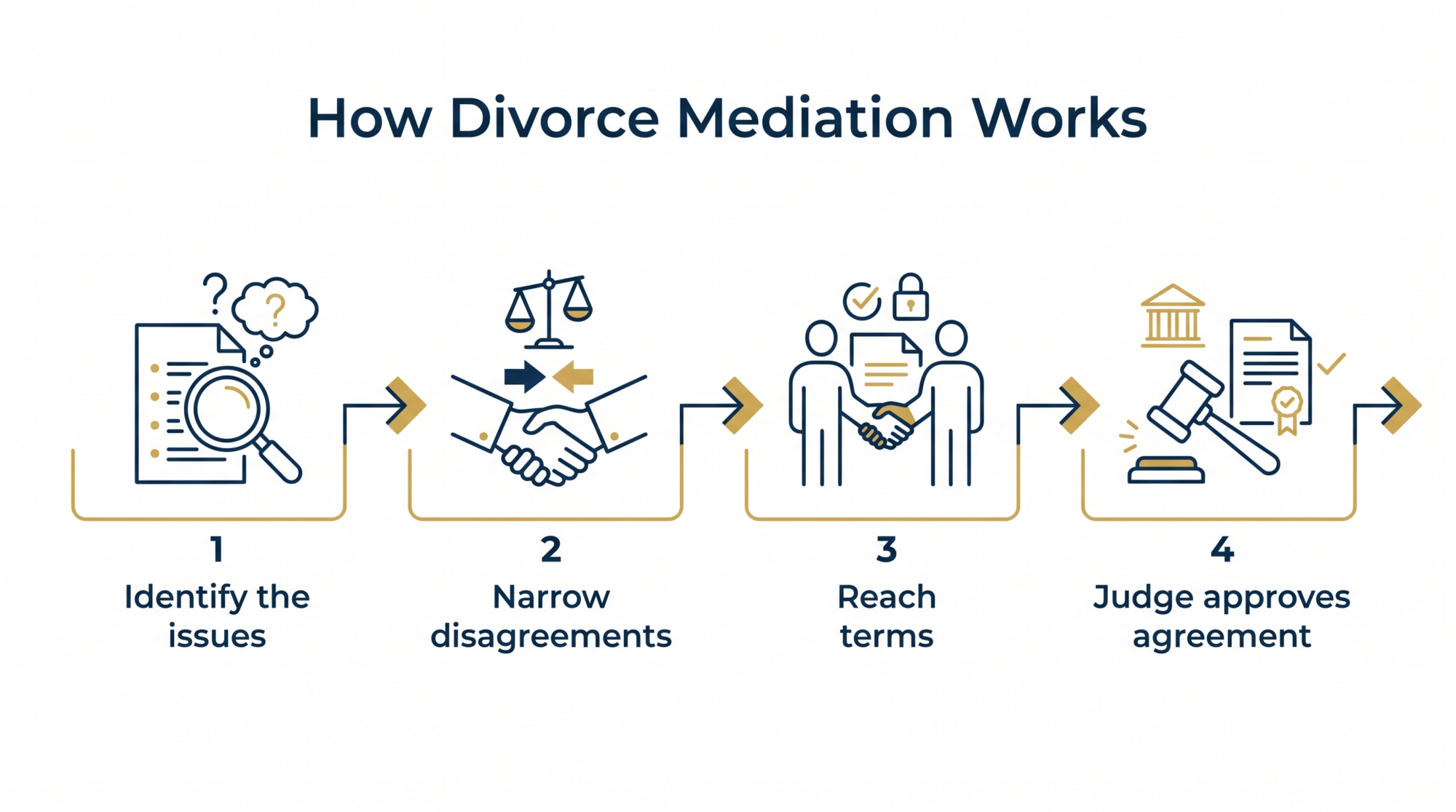
Mediation usually happens in one or more sessions where the mediator works through each disputed issue with the couple. A typical session may have both spouses in the same room, or in separate rooms with the mediator moving between them, which is common when there is high conflict. The mediator reviews what the couple agrees on, narrows the disagreements, and floats options for the open issues. When the spouses reach terms, the agreement is written up and, once signed and approved by the judge, becomes part of the final divorce judgment. Anything discussed in mediation is generally confidential, so a failed session does not become evidence against you at trial.
How much does divorce mediation cost in Michigan?
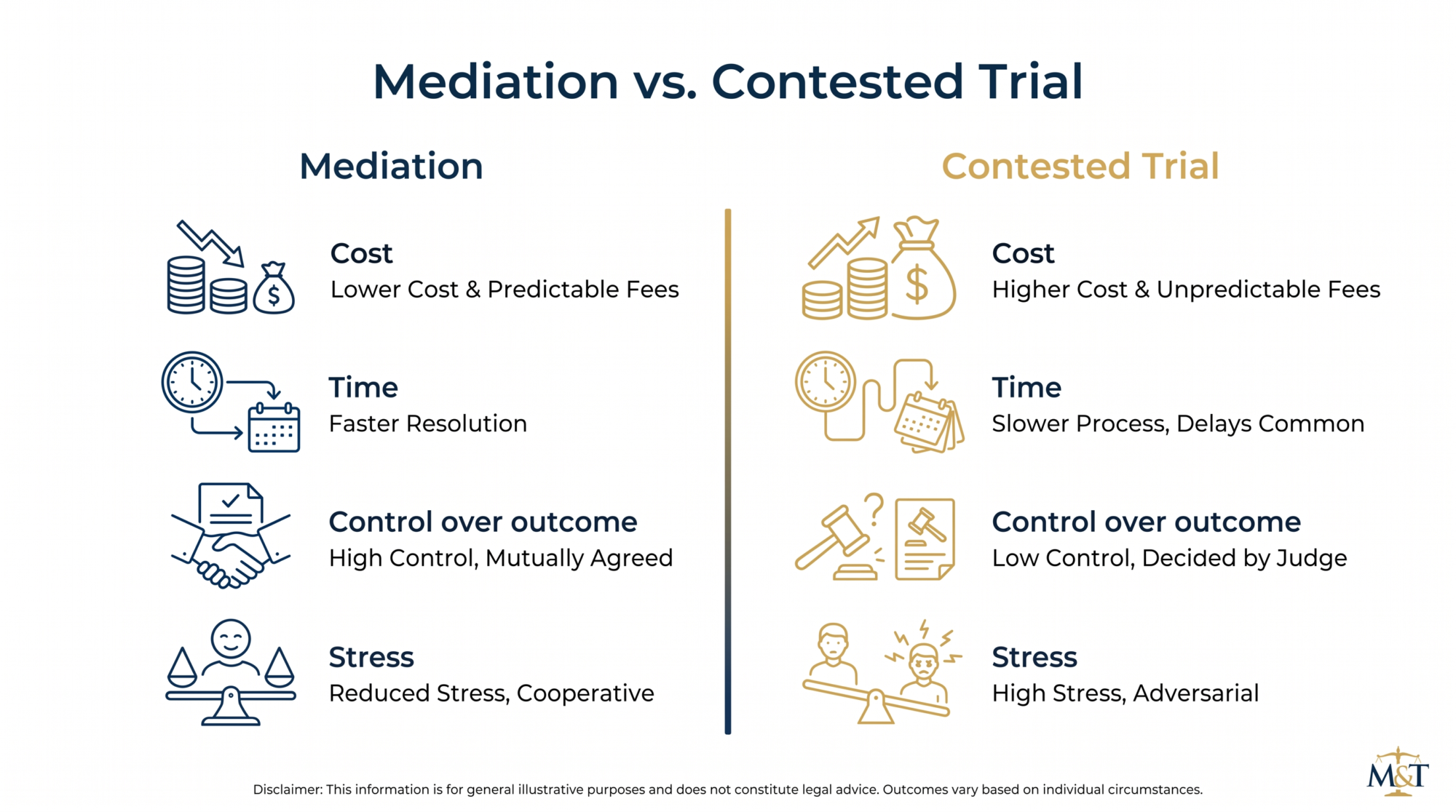
Mediation almost always costs less than a contested trial because it takes far less time. Mediators typically charge an hourly rate that the spouses often split, and many disputes resolve in a handful of hours rather than the months of discovery, motions, and hearings a trial requires. Court-connected mediation programs sometimes offer reduced rates, and the Michigan court system supports mediation as a cost-saving alternative through the Michigan Courts. The bigger savings come from avoiding the attorney hours a full trial demands. Even with your own attorney advising you, a mediated divorce is usually a fraction of the cost of litigating every issue.
What happens if mediation succeeds or fails?
If mediation succeeds, the signed agreement is submitted to the court and folded into your judgment of divorce, which ends the dispute on those issues. If it fails, or resolves only some issues, the unresolved matters move forward to be decided by the judge at trial. Partial success still helps, because every issue you settle in mediation is one less thing to fight over and pay for later. Many Macomb County divorces that start as bitter disputes settle most or all of their issues in mediation once each side sees the full financial picture.
How should you prepare for mediation?
Good preparation is what separates a productive mediation from a wasted one. Gather your financial documents, including income records, account statements, and a list of assets and debts. Think through your priorities in advance and decide where you can be flexible and where you cannot. Come with a realistic sense of what a judge would likely order, because that is your alternative if mediation fails. Keep the focus on your children and your long-term interests rather than winning each exchange. An attorney can help you set these priorities and review any proposed agreement before you sign.
Frequently asked questions
Is divorce mediation required in Macomb County?
Often, yes. Judges in the 16th Judicial Circuit Court routinely order couples into mediation for custody and property disputes before allowing a trial. You must participate in good faith, but you are never required to accept a settlement you do not agree with.
How much does divorce mediation cost in Michigan?
Mediators usually charge an hourly rate that spouses often split, and many disputes resolve in a few hours. That makes mediation far cheaper than a contested trial, which involves months of discovery, motions, and hearings. Court-connected programs sometimes offer reduced rates.
Do I need a lawyer for divorce mediation?
You are not required to have one, but a mediator is neutral and cannot give you legal advice or protect your interests. Many people mediate with their own attorney advising them and reviewing any agreement before they sign it.
Is what I say in mediation confidential?
Generally yes. Communications in divorce mediation are confidential, so offers and discussions from a failed session usually cannot be used as evidence against you at trial. This lets both sides negotiate openly.
What happens if divorce mediation fails?
If mediation does not produce a full agreement, the unresolved issues move forward to be decided by the judge at trial. Any issues you did settle in mediation still stand, which reduces the time and cost of the remaining case.

Prepare for mediation with Aiello & Associates
Mediation can save you thousands of dollars and months of stress, but only if you walk in prepared and know what a fair deal looks like. The attorneys at Aiello & Associates help Macomb County spouses set priorities, organize their finances, and review any agreement before it becomes binding. Call 586-303-2211 or schedule a free consultation to get ready for a mediation that actually works in your favor.

Related Posts

September
Legal Separation vs. Divorce in Michigan: What “Separate Maintenance” Really Means
Michigan does not have "legal separation" the way many other states do. Instead, it offers a court action called separate maintenance, which follows almost the same process as a divorce but leaves the marriage legally intact at the end. A separate maintenance judgment can divide…

September
Fathers’ Rights in Michigan: Custody, Parenting Time, and Common Myths
In Michigan, fathers' rights to custody and parenting time are equal to a mother's. Family court judges decide custody using the 12 best interest factors in MCL 722.23, and the law forbids favoring either parent because of gender. The idea that mothers automatically win custody…

August
Divorce Mediation in Macomb County: How It Works, What It Costs, and When It’s Required
Divorce mediation is a process where a neutral third party helps both spouses reach an agreement on custody, support, and property without a trial. In Macomb County, the 16th Judicial Circuit Court routinely refers divorcing couples to mediation for custody and property disputes before a…
Start With A Free Initial Consultation
Email us below or call 586-303-2211 to learn your legal options.
Contact Us Today!

Attorney Advertising. This information is designed for general information only. The information presented should not be construed to be formal legal advice nor the formation of a lawyer/client relationship. Past results and testimonials are not a guarantee, warranty, or prediction of the outcome of your case, and should not be construed as such. Past results cannot guarantee future performance. Any result in a single case is not meant to create an expectation of similar results in future matters because each case involves many different factors, therefore, results will differ on a case-by-case basis. By providing contact information, users acknowledge and give explicit consent to be contacted via the methods of communication provided, including SMS. Message and data rates may apply. Message frequency may vary. Reply STOP to opt out.
Attorney Advertising. This information is designed for general information only. The information presented should not be construed to be formal legal advice nor the formation of a lawyer/client relationship. Past results and testimonials are not a guarantee, warranty, or prediction of the outcome of your case, and should not be construed as such. Past results cannot guarantee future performance. Any result in a single case is not meant to create an expectation of similar results in future matters because each case involves many different factors, therefore, results will differ on a case-by-case basis. By providing contact information, users acknowledge and give explicit consent to be contacted via the methods of communication provided, including SMS. Message and data rates may apply. Message frequency may vary. Reply STOP to opt out.
Copyright 2026 | All Rights Reserved | Privacy Policy | Terms Of Use | Accessibility Notice