
Call for a Free Consultation
586.303.2211
Legal Separation vs. Divorce in Michigan: What “Separate Maintenance” Really Means
Michigan does not have “legal separation” the way many other states do. Instead, it offers a court action called separate maintenance, which follows almost the same process as a divorce but leaves the marriage legally intact at the end. A separate maintenance judgment can divide property, set support, and order custody, yet the spouses remain legally married. If you are unsure whether you want a full divorce, our Macomb County divorce attorneys can help you decide which path fits your situation.
What is separate maintenance in Michigan?
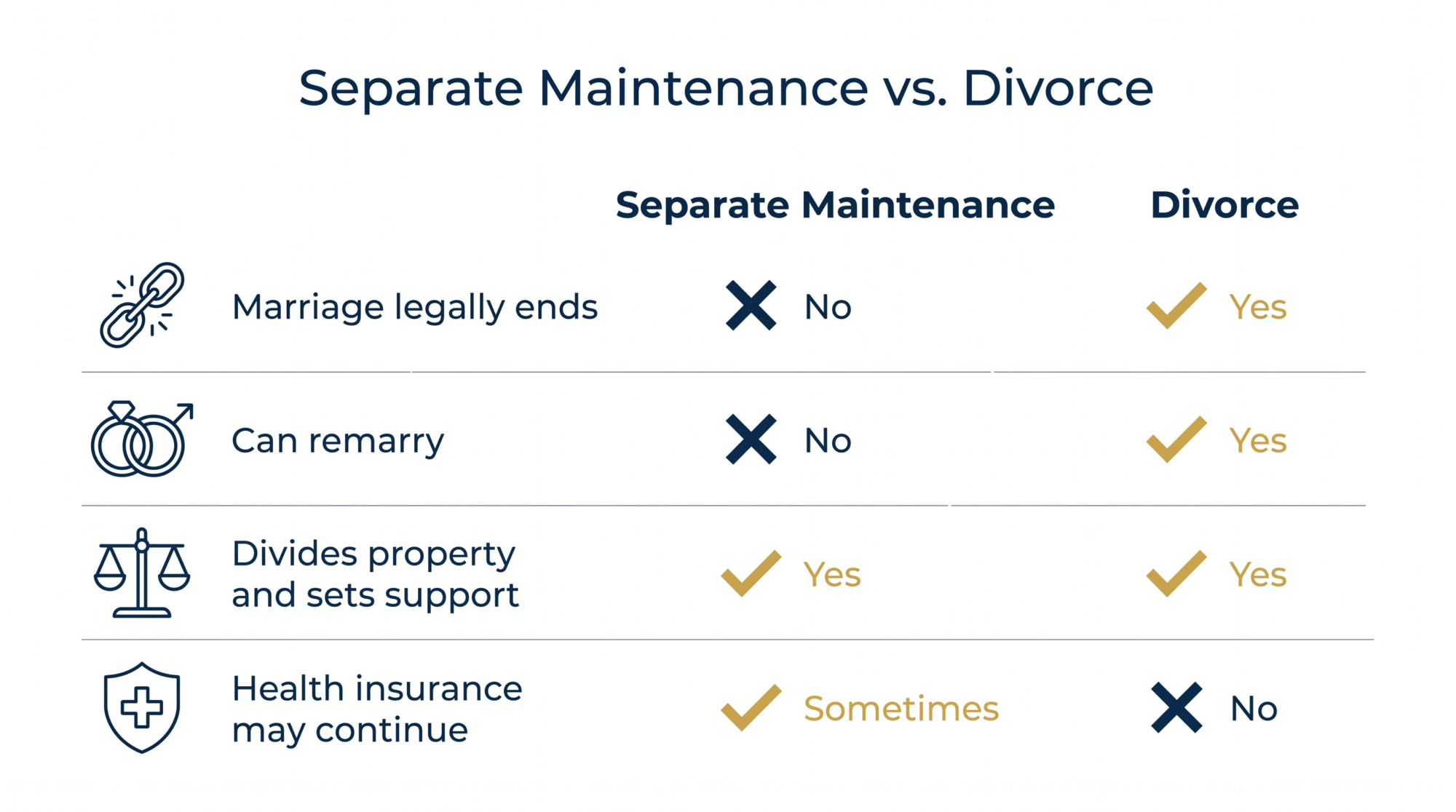
Separate maintenance is a legal action that resolves the financial and parenting issues of a marriage without ending it. The court can divide marital property and debts, order spousal support, and set custody, parenting time, and child support, just as it would in a divorce. The one difference is the final result. When the case is over, the spouses are legally separated in practical terms but still married on paper, so neither can remarry. People sometimes call this a legal separation, but the correct Michigan term is separate maintenance.
How is separate maintenance different from divorce?
The processes are nearly identical, but the ending is not. A divorce dissolves the marriage, freeing both spouses to remarry, while separate maintenance keeps the marriage legally in place. Both actions start with a complaint filed in the 16th Judicial Circuit Court, both address property, support, and children, and both are subject to Michigan’s residency requirements. The practical distinction is that divorce ends the legal marriage and separate maintenance does not. Everything else, from dividing the house to setting a parenting schedule, works much the same way.
Why would someone choose separate maintenance?
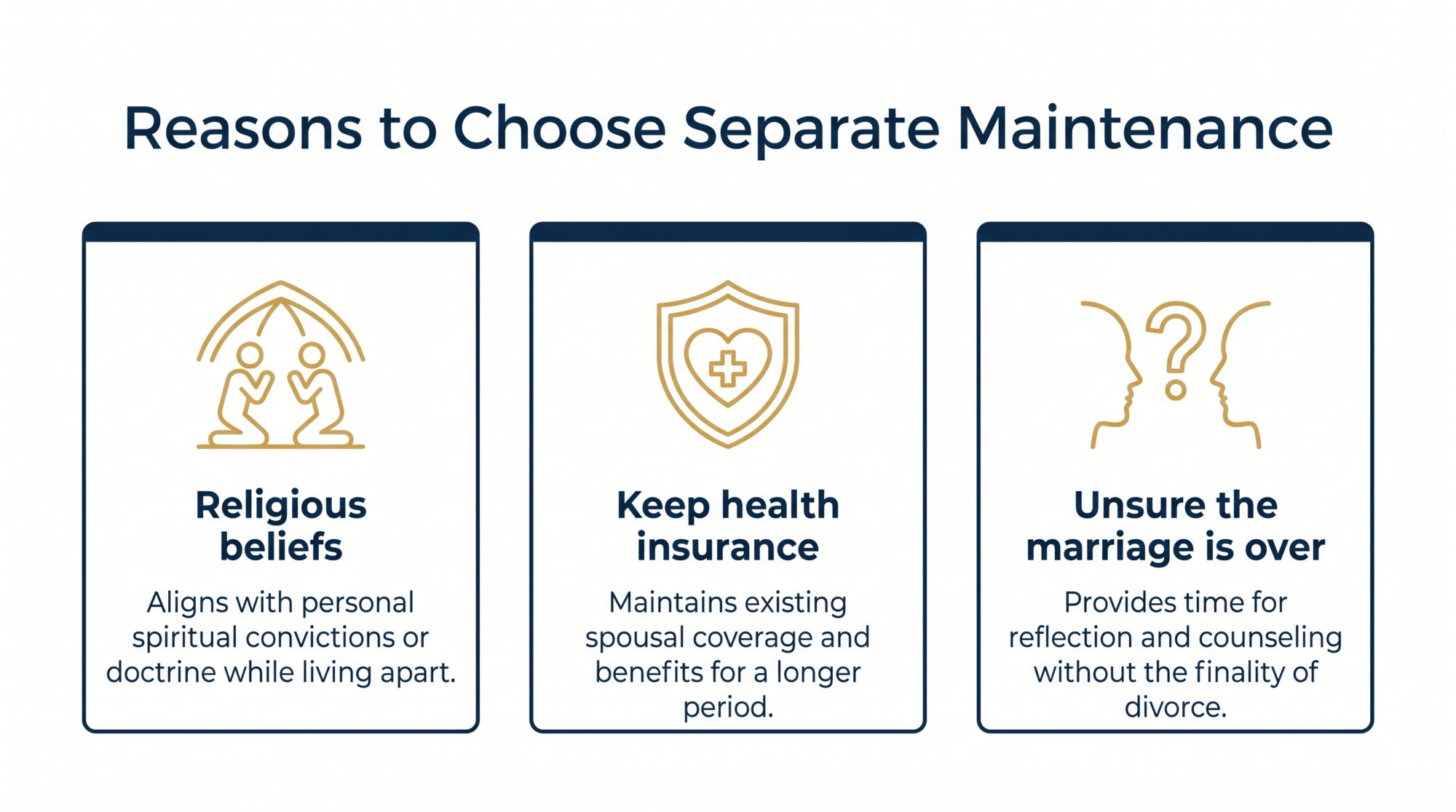
Spouses choose separate maintenance when they want to separate their finances and living arrangements but have a reason not to end the marriage itself. Common reasons include religious beliefs that discourage divorce, a desire to keep a spouse on a health insurance plan that would end with divorce, or personal uncertainty about whether the marriage is truly over. Some couples use it as a structured middle step while they decide. It gives many of the protections of a divorce, including a court-ordered division of assets and support, without the finality.
Does separate maintenance affect health insurance?
It can, and this is one of the main reasons people choose it, but the answer depends on the specific plan. Because the spouses stay legally married, some health insurance plans continue to cover a spouse under separate maintenance where a divorce would end that coverage. This is not guaranteed. Many plans and insurers treat separate maintenance the same as divorce and will drop a spouse anyway, so it is essential to confirm the terms with the specific insurer before relying on this benefit. Do not assume coverage continues without checking.
What happens if one spouse wants a divorce and the other wants separate maintenance?
If one spouse files for separate maintenance and the other responds by asking for a divorce, the case generally proceeds as a divorce. Michigan law does not let one spouse force the other to stay married. When a spouse who is served with a separate maintenance complaint files a counterclaim for divorce, the court treats the matter as a divorce and can enter a judgment ending the marriage. In practice, this means separate maintenance only keeps the marriage intact if both spouses are willing to leave it that way. You can review Michigan’s family court procedures through the Michigan Courts.
How do you decide which option is right for you?
The right choice depends on why you are separating and what you need to protect. If you are certain the marriage is over and you may want to remarry, divorce is usually the cleaner path. If religious, insurance, or personal reasons make you want to stay legally married for now, separate maintenance may fit better, as long as the other spouse agrees and any insurance benefit is confirmed. Because both actions make binding decisions about your money and your children, it is worth talking through the trade-offs with an attorney before you file.
Frequently asked questions
Does Michigan have legal separation?
Not in the way many states do. Michigan offers separate maintenance, a court action that divides property and sets support and custody like a divorce but leaves the marriage legally intact. People often call it legal separation, but the correct term is separate maintenance.
What is the difference between separate maintenance and divorce?
The processes are nearly identical and both address property, support, and children. The difference is the ending: divorce dissolves the marriage and allows remarriage, while separate maintenance keeps the spouses legally married.
Why would someone choose separate maintenance instead of divorce?
Common reasons include religious beliefs that discourage divorce, keeping a spouse on a health insurance plan that would otherwise end, or uncertainty about whether the marriage is truly over. It provides court-ordered division of property and support without ending the marriage.
Does separate maintenance keep my spouse on my health insurance?
Sometimes, because the spouses stay legally married, but it is not guaranteed. Many plans treat separate maintenance the same as divorce and drop the spouse anyway. Always confirm the terms with the specific insurer before relying on continued coverage.
What if my spouse wants a divorce but I want separate maintenance?
If one spouse files for separate maintenance and the other counterclaims for divorce, the case generally proceeds as a divorce. Michigan does not let one spouse force the other to stay married, so the marriage can be dissolved.

Not sure which path is right? Talk to Aiello & Associates
Choosing between separate maintenance and divorce is a decision with real financial and personal consequences, and the right answer depends on your specific reasons and goals. The attorneys at Aiello & Associates help Macomb County spouses weigh the options and protect what matters to them. Call 586-303-2211 or schedule a free consultation to talk through whether separate maintenance or divorce makes more sense for you.

Related Posts

September
Legal Separation vs. Divorce in Michigan: What “Separate Maintenance” Really Means
Michigan does not have "legal separation" the way many other states do. Instead, it offers a court action called separate maintenance, which follows almost the same process as a divorce but leaves the marriage legally intact at the end. A separate maintenance judgment can divide…

September
Fathers’ Rights in Michigan: Custody, Parenting Time, and Common Myths
In Michigan, fathers' rights to custody and parenting time are equal to a mother's. Family court judges decide custody using the 12 best interest factors in MCL 722.23, and the law forbids favoring either parent because of gender. The idea that mothers automatically win custody…

August
Divorce Mediation in Macomb County: How It Works, What It Costs, and When It’s Required
Divorce mediation is a process where a neutral third party helps both spouses reach an agreement on custody, support, and property without a trial. In Macomb County, the 16th Judicial Circuit Court routinely refers divorcing couples to mediation for custody and property disputes before a…
Start With A Free Initial Consultation
Email us below or call 586-303-2211 to learn your legal options.
Contact Us Today!

Attorney Advertising. This information is designed for general information only. The information presented should not be construed to be formal legal advice nor the formation of a lawyer/client relationship. Past results and testimonials are not a guarantee, warranty, or prediction of the outcome of your case, and should not be construed as such. Past results cannot guarantee future performance. Any result in a single case is not meant to create an expectation of similar results in future matters because each case involves many different factors, therefore, results will differ on a case-by-case basis. By providing contact information, users acknowledge and give explicit consent to be contacted via the methods of communication provided, including SMS. Message and data rates may apply. Message frequency may vary. Reply STOP to opt out.
Attorney Advertising. This information is designed for general information only. The information presented should not be construed to be formal legal advice nor the formation of a lawyer/client relationship. Past results and testimonials are not a guarantee, warranty, or prediction of the outcome of your case, and should not be construed as such. Past results cannot guarantee future performance. Any result in a single case is not meant to create an expectation of similar results in future matters because each case involves many different factors, therefore, results will differ on a case-by-case basis. By providing contact information, users acknowledge and give explicit consent to be contacted via the methods of communication provided, including SMS. Message and data rates may apply. Message frequency may vary. Reply STOP to opt out.
Copyright 2026 | All Rights Reserved | Privacy Policy | Terms Of Use | Accessibility Notice